Submitted by george.somers@… on


Led by The Revd Dr Ed Chan-Stroud, a curate and Research Fellow in Christian Ethics at the University of Oxford, Wounded Shepherds found its roots when the university commenced research into ministry-associated trauma, and the impact of ministry on clergy mental health, in 2023.

Working with their knowledge exchange partners, The Mind & Soul Foundation - who amalgamated with Clergy Support Trust earlier this year - the project began as an investigation into a pattern they were seeing amongst clergy leaving pastoral ministry prematurely. This led to the writing of academic articles and two books, due to be published in 2027.

Ed then reached out to the Trust, to see how a collaboration could mutually inform each others work, to best support clergy and their families.

"There are four areas that we're particularly looking at", says Ed.

"There are significantly complex pastoral interactions, unhealthy congregational dynamics, unhealthy power relationships - which could be an ordinand or curate and a training incumbent - and identity-based discrimination. Each of these four areas are sites where ministry-associated trauma might arise."
Image
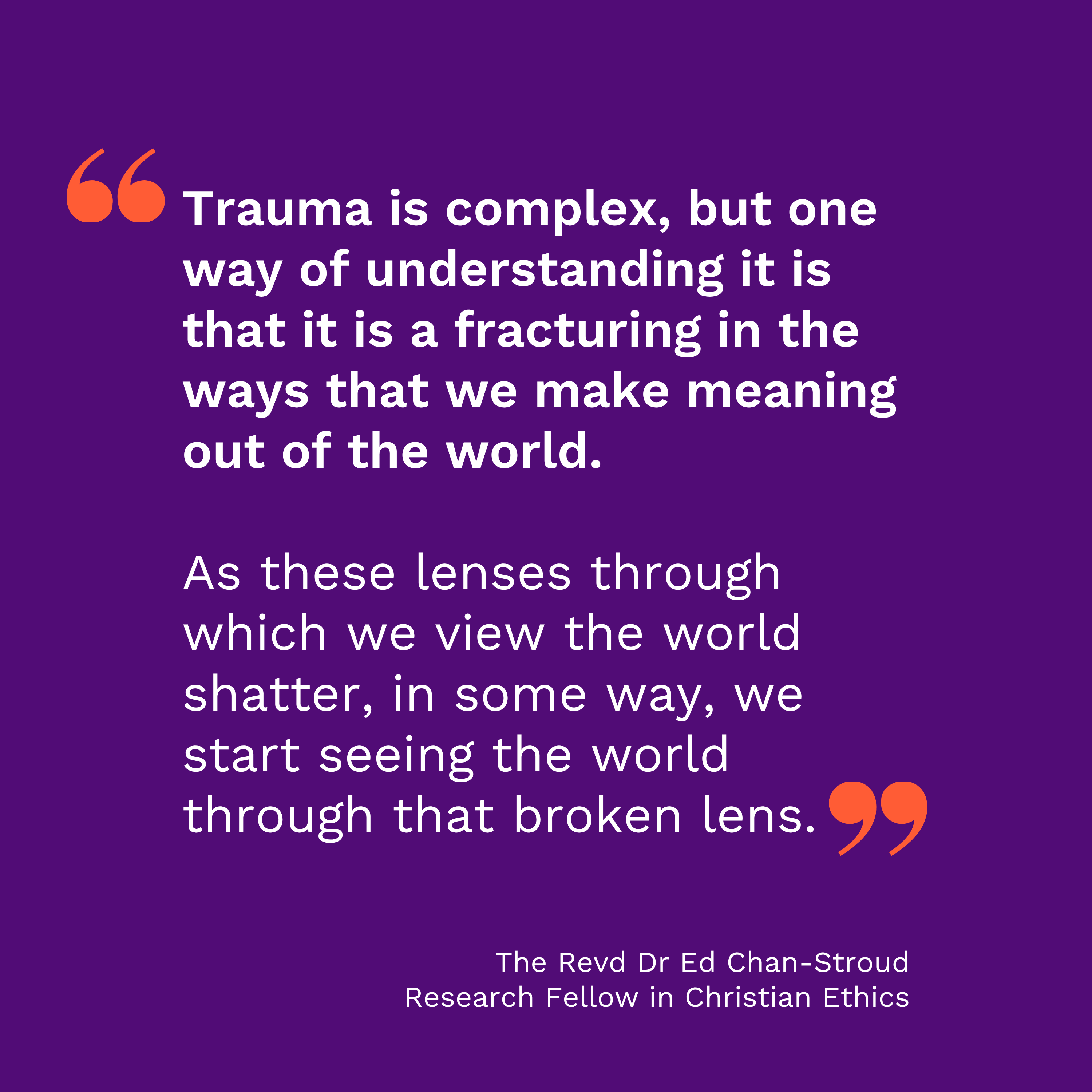
Text reads: Trauma is complex, but one way of understanding it is that it is a fracturing in the ways that we make meaning out of the world. As these lenses through which we view the world shatter, in some way, we start seeing the world through that broken lens.

What we seek to achieve

The first challenge is to understand what's happening, to identify the trends that exist amongst clergy leaving pastoral ministry, and how the unique pressures placed on clergy compare to that of similar frontline vocations, like healthcare professionals, where much research has been done already.

The appropriate support could then take many forms, from formal mental health care to reflective practice groups, to pastoral supervision. Ed believes that the best way forward involves combining these with a thorough theological understanding of the call to ministry, the role of Christian doctrines and spiritual practices in providing meaning, and support from the Church.

Ed, the university and the Trust have ambitious goals for the next three years of the project, including contributions to academic journals, continued knowledge exchange with practitioners and theologians, and specialist training days with IME2 Officers and others at Theological Colleges.

Our hope is that key findings from Wounded Shepherds' research will find a home on our Support Hub - a brand new source of interactive, tailored courses, webinars and guides, to support clergy households in their lives and ministry - in the months and years ahead.

The Trust and mental health

Clergy Support Trust has long been concerned about the strain placed on the emotional wellbeing and mental health of training, serving and retired clergy.

The Church of England's ten-year Living Ministry study found that 40% of the 500 clergy they surveyed felt isolated, and 35% showed signs of possible, mild or clinical depression. We were privileged to provide funding towards this study.

The Trust was pleased that, recognising the stresses and pressures of their calling, General Synod – the Church’s governing body - voted to ensure clergy can access counselling and therapy in February 2026. Last year, the Trust supported clergy and their partners facing stress, anxiety and depression with over £200,000 in funding towards counselling and therapy, across 240 grants.

We also enjoy close relationships with organisations who support clergy in crisis or approaching breakdown. This year, we supported The Sheldon Retreat Centre and St Bueno's Jesuit Spirituality Centre with £49,000 in funding to enable their vital work.

As part of our programme of Wellbeing Workshops for serving clergy across the UK, we run a workshop on Trauma-informed Ministry, drawing upon scripture, trauma theory and neurobiology to explore the causes of overwhelm and what can be done.

Image
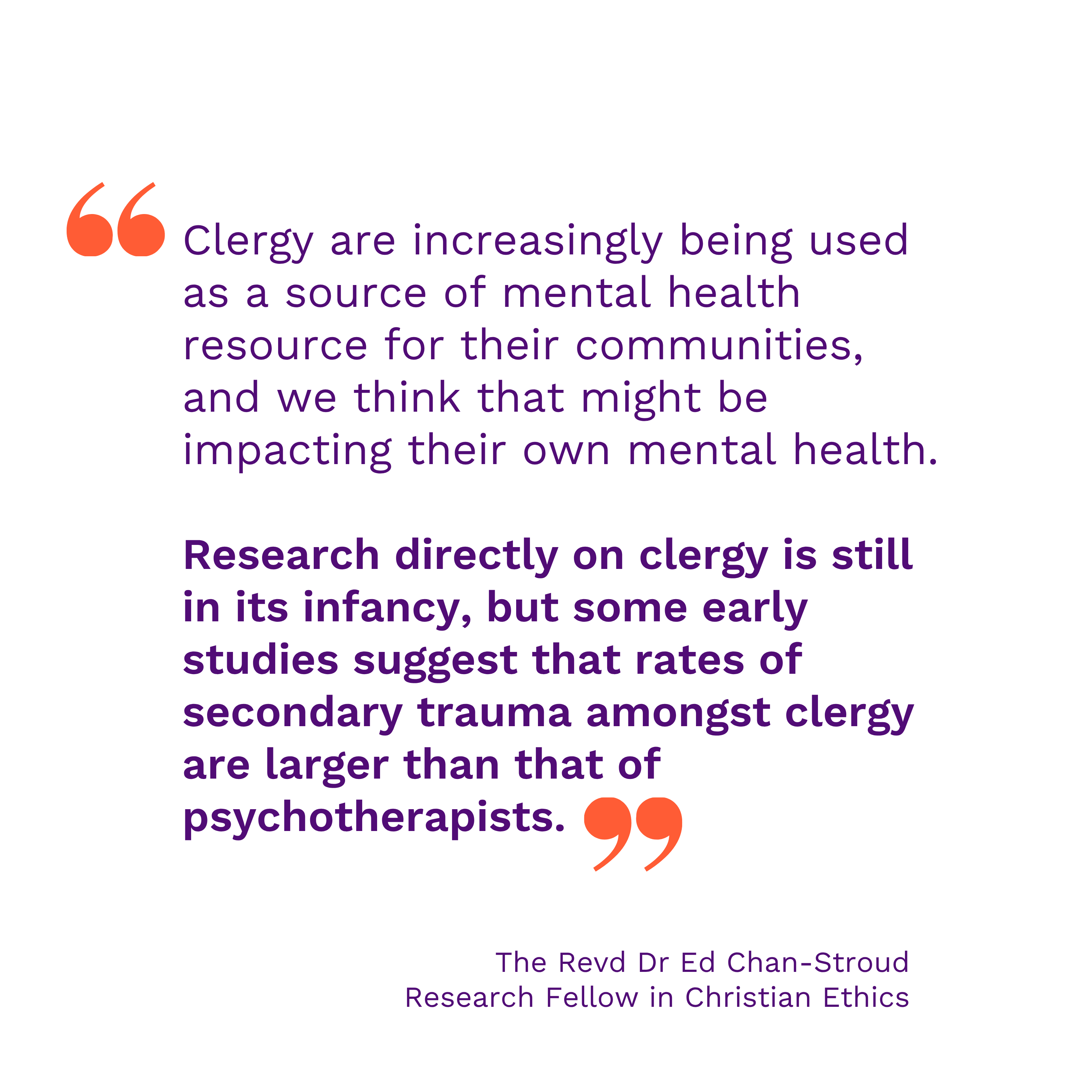
Text reads: Clergy are increasingly being used as a source of mental health resource for their communities, and we think that might be impacting their own mental health. Research directly on clergy is still in its infancy, but some early studies suggest that rates of secondary trauma amongst clergy are larger than that of psychotherapists.

News from the Trust

NOTES FOR EDITORS
Clergy Support Trust is the largest and oldest charity focussed on the wellbeing of clergy and their families. The Trust, originally founded in 1655, provides confidential help for Anglican clergy and their families across the UK, Ireland, Isle of Man, and Diocese in Europe. The Trust are confidential, independent, inclusive, and impartial, and we support clergy from training through to retirement. In 2025, we supported over 2,900 households with more than 7,000 grants.
For media enquiries, please email our External Relations team at hello@clergysupport.org.uk.